Showing posts with label Tech. Show all posts

Sunday, 31 July 2016

An update to 'Pokémon GO' just removed one of the game's best features


A big update came to "Pokémon GO" Saturday and fans are not happy with some of the changes.
Although you can now customize your avatar whenever you'd like, one of those other changes includes the removal of the battery saver within the app.
The battery saver feature in "Pokémon GO" dimmed your device screen if you had it by your side.
It made it quite helpful if you were walking around trying to hatch an egg, but didn't want to stare at your screen the entire time.
It was also handy if you didn't want to stare at your screen the entire time you were walking around waiting for a Pokémon to appear. You could just have your phone at your side set to vibrate any time a Pokémon appeared.

Before and after updating "Pokémon GO" to the latest version. The Battery Saver function is now gone in the updated version, seen on the right. Niantic/The Pokémon Company
"Pokémon GO" can be pretty draining on your battery life so the idea of a battery saver was pretty handy. If you head out to a crowded area in New York City, you're bound to see players carrying around portable external batteries.
It's not clear why Niantic removed the battery saver feature. Maybe it wasn't actually saving that much battery. Some users reported that it was the cause of in-app crashes so removing it may be a simple fix at the moment for a larger-scale issue.
During a panel at Comic-Con last weekend, Niantic CEO John Hanke said their priority was making sure the servers were up and running smoothly and that users were able to play the game. New features wouldn't be added until servers were reliable. Taking away features such as the nearby footprints and battery saver mode may be steps in the direction towards remedying larger gaming issues at the moment.
Here's a quick look at all of the updates that were made in the latest version of the game:

read more...

Friday, 29 July 2016

Leak may have just confirmed the secret Apple had up its sleeve for the iPhone 7


APPLE’S iPhone 7 is shaping up to be a more intriguing device than we may have originally given it credit for.
According to a new report from Macotakara — a site with an impressive track record regarding Apple rumours — the home button on Apple’s next-gen iPhone will sit flush with the screen and will not move when pressed.
Instead, Apple is planning to incorporate a series of sensors underneath the home button that will trigger a slight vibration when pressed. This, in turn, will provide users with the illusion that the iPhone 7 home button is a mechanical button.
While we’ve seen rumblings pointing to a home button redesign before, Macotakara’s corroboration arguably provides exceedingly convincing proof that the iPhone’s tried and true home button will see an innovative new redesign come September.
The report further adds that the sensors underneath the iPhone 7 home button will be pressure sensitive, thereby paving the way for Apple to incorporate 3D Touch functionality on the screen as well as via the home button itself.
Notably, Apple has already implemented this type of technology on its MacBook line via a feature it calls Force Touch.
To provide some context, here’s what Apple has to say about the Force Touch feature on the MacBook: “Force sensors detect how much pressure you’re applying, and the new Taptic Engine provides a click sensation when you press anywhere on the surface.
“Now the click that once was a single, mechanical function is just the start of what you can do with Force Touch. The sensory capabilities of the Force Touch trackpad allow you to tell your MacBook what you want it to do based on subtle differences in the amount of pressure you apply. This makes it possible to perform a variety of different actions in different apps, all on the same surface. And it can respond with haptic feedback you can actually feel, making your MacBook more usable and personal than ever before.”
Now imagine that type of user experience wrapped up in a sleek new iPhone 7: all of a sudden, the iPhone 7 becomes a much more interesting device than previously imagined.
The report further adds that Apple is planning to introduce a new colour to its iPhone line-up this fall, a Space Black model to be specific. Notably, we’ve seen a few rumblings suggesting the same over the past few weeks. All told, Apple’s iPhone 7 line-up will likely come in an array of five colours — Gold, Rose Gold, Space Grey, Silver and Space Black. While previous rumours hinted at a dark blue iPhone 7 model, those reports were subsequently debunked.
As a final point, word leaked over this past weekend that Apple’s new iPhone 7 models are set to go on sale on September 16. While Apple hasn’t officially confirmed anything just yet, the above leak came via Evan Blass, as reputable a leaker as they come.
read more...

Thursday, 10 July 2014

This 'iPhone 6' Screen Looks Nearly Indestructible

Apple fans, here’s a new reason to get excited: The screen on the next iPhone appears to be much less likely to shatter into a million pieces.
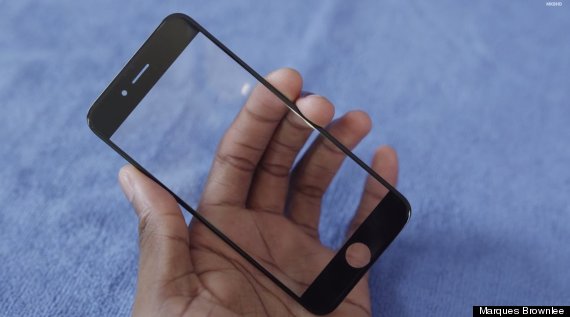
Marques Brownlee, a popular YouTube host who was once called "the best technology reviewer on the planet" by a Google executive, purportedly got his hands on a front panel from the so-called "iPhone 6."
It's supposedly made with a much-hyped display material called sapphire crystal. Apple already uses a small amount of sapphire glass for the "Home" button and camera lens in the iPhone 5S, but the rest of the front display is made of Gorilla Glass -- a product Apple has been using for years and appears ready to abandon when it releases a new phone this fall.
The new glass display is “paper thin,” Brownlee said in his video.

We were already pretty sure the glass was going to be thinner, more flexible and more durable than previous iterations, but Brownlee put those claims to the test by running the display through a gauntlet of scratches and twists. He stabbed the panel with a knife, scratched it with a set of keys and bent the screen 90 degrees -- all without damaging the glass.


"I slowly realized there is absolutely no way I can break this display under my own power," he said. "The worst blemish on the surface was actually my fingerprint marks and the dust from handling it so much."
The glass is also extremely high-quality, Brownlee noted: “There’s absolutely no color shift while looking through the sapphire glass.”

Brownlee credited well known Apple rumormonger Sonny Dickson, who recently made his own video showcasing sapphire glass’s bendiness, for giving him the screen.
Brownlee's screen measures 4.7 inches diagonally, keeping with rumors that Apple will release two different-sized iPhones this year: A 4.7-inch model and 5.5-inch one. Apple is thought to be going big to stay competitive with the increasingly popular large smartphones sold by Samsung and others.
Watch Brownlee's entire video below:

SOURCE - The Huffington Post

read more...

Tuesday, 8 July 2014

Netflix Will Pay You To Watch Netflix All Day


Netflix wants YOU... to watch movies in bed.
The streaming media site is looking for a qualified candidate in the United Kingdom or Ireland to help with its recommendation system by watching movies and TV shows. The Netflix "tagger" chooses from a pool of more than 1,000 descriptive tagsto accurately describe the flick from the plot to the overall mood.
(Sorry, Americans. A Netflix representative said that the company does not have any plans currently to hire additional taggers in the U.S.)
Netflix reportedly employs dozens of taggers in multiple countries. The system emerged after Netflix noticed that some users were not rating shows, which is what the service initially relied on to generate recommendations.
"The things is for some people it is a bit of a nice challenge to give things a star rating but for a lot of our users they considered that work," Netflix's Vice President of Product Innovation Todd Yellin told Tech Radar. "The core stuff for us now is paying attention to what users watch. That can tell us how many categories they like so the tagging effort started heading in that direction."
According to the job listing on Netflix's site:
This “tagging process” is the first stage of the Netflix recommendation system and works in concert with advanced algorithms that generate highly personalized suggestions for every one of Netflix’s nearly 50 million members, offering them an individualized set of titles matching their tastes.
But don't think the paid position just involves watching movies in bed. The tagging process apparently requires a bit of experience and a fair amount of note-taking.
The listing continues:
The role will offer flexible hours working from home and would suit those with a passion for films and TV programmes, as evidenced by a degree in film or film history and/or experience directing, screening writing or filmmaking. Applicants with analysis experience (e.g. as a critic or work in development) would also be well suited.
In 2012, Canada.com writer Russ Martin interviewed Toronto-based filmmaker Jordan Canning, who gets paid to watch and describe about five Netflix programs per week. As she watches, Canning keeps meticulously documents details of each program in an Microsoft Excel spreadsheet.
"It covers everything from big picture stuff like storyline, scene and tone, to details of whether there is a lot of smoking in the movie," Canning said of the requirements.
The post has been updated to include comment from Netflix.

Source - HuffNews
read more...

Thursday, 6 March 2014

Stop Complaining About Facebook And Do These 13 Things To Make It Better


Whether you like it or not, you're probably on Facebook more often than you want to be. A lot of people wish they didn't feel compelled to check it over and over only to see the same boring people post the same boring things.
Thankfully, it doesn't have to be this way.
There are actually a whole lot of tips and tricks to make your Facebook experience a little less painful, both from Facebook itself and from third-party apps. We have 13 of them right here. Go forth and make your Facebook a bit more tolerable.
1. Set boundaries between real friends, family, exes and randos: You can sort everyone into groups
You have different friends from different areas of your life, so why should you have to share the same things with everyone? If you split your friends up into different categories, you can choose which specific groups of friends will see different statuses, links and photos you post.
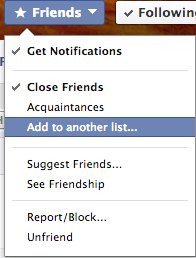
Facebook automatically creates some groups (called Smart Lists) based on the schools you've attended, jobs you've had and places you've lived. Here's how to put someone in an existing group or create a new one. On a friend's profile, click the "Friends" button. There, you'll see which groups he or she belongs to and you'll have the option to create a new group.
facebook work for you
2. Stalk your favorite people
While you're there at the "Friends" button, you can click "Get Notifications." That will give you a notification when a chosen friend posts a new status or photo. Do it with your best friend or with a crush -- they won't know you set a notification for them.
3. Stop friends from sending you those annoying "Candy Crush" requests
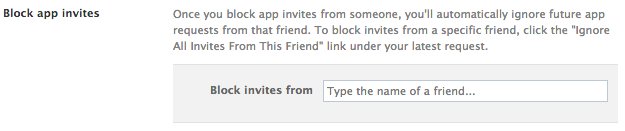
Sorry, I'm not going to help you get more lives on "Candy Crush." Fortunately, you can stop those irritating requests from clogging up your page without having to say anything. Just go to this page, and type the offending friend's name into the search bar. And bam, they're ignored forever.
facebook work for you
4. Block the people you hate without their knowledge
While we can't get your weird cousin to stop believing conspiracy theories, we can hide his posts from your News Feed. You don't have to unfriend him to remove him from your Facebook life.
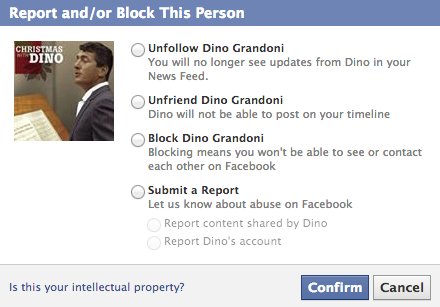
To block someone from your feed, go to their profile and click "Friends." Then click "Report/Block." You'll see these options:
facebook work for you
If you don't want this person's posts to show up in your News Feed (I don't mean it, Dino!), you can press "Unfollow." Your friend will never know, and you won't have to deal with his or her irritating posts anymore.
5. Fix your terrible spelling
Did you spell something wrong in a post? Sometimes you don't want to delete a status update (can't lose those precious "Likes"!), in which case you can edit things after you've posted them. Just click the little pencil icon near something you've written (comments, statuses, photo descriptions, etc.) and press "Edit." Be warned, though, your friends will be able to see how you've tweaked a post.
6. Erase your embarrassing past
If you're curious about what parts of your Facebook activity others can see, check out your activity log. From that page, you can change privacy settings and delete old posts. You can also see which photos of yours are public, by clicking "Photos," and then "Shared with: Public."
7. Replace things you hate with things you love
Rather is a Chrome and Firefox extension that lets you replace anything you don't like (links to Upworthy, TV spoilers, wedding photos, food porn, etc.) with something you do like (photos of puppies, your favorite celebrity, etc.). It can also remove offending posts altogether.
8. Never miss a status
By default, your Facebook News Feed is set to show you "Top Stories" first, which can be irritating, since it often means that your feed is filled with the same lame websites and articles your friends are sharing. A lot of people feel like they're missing thingsthat happen in their friends' Facebook lives because of Facebook's algorithm.Facebook looks at the number of comments the item has, how many likes it has, who posted it and what genre of post it is (photo, video, status, etc.) to decide whether or not to include it as a top story.
Fortunately, there's a way to change your feed to reverse-chronological order, like it is on Twitter and Instagram. Either click here to find your "Most Recent" feed or look at the top of your News Feed for a way to toggle between "Top Stories" and "Most Recent."
9. Take a survey to improve your News Feed
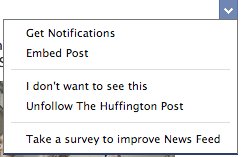
You can take control of your destiny (and your News Feed) by telling Facebook what you like and don't like to see. All you have to do is take a survey about your likes and dislikes. Go to any post in your feed and you will find a little down arrow at the top right. Click on that and you'll see something like this:
facebook work for you
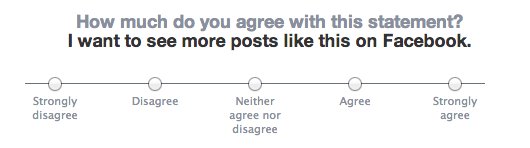
Click "Take a survey to improve News Feed." Facebook will show you a series of 10 posts from your feed and ask you to judge them. Here is what you're asked to say about each post:
facebook work for you
You can take this survey as often as you want.
10. Mark posts as read
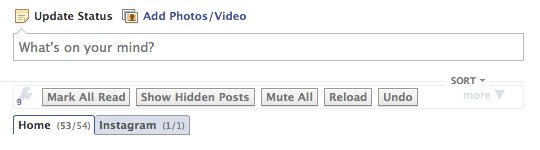
This tip and the next two are made possible by a browser extension called Social Fixer, which is available for free download for Chrome, Safari, Firefox and more. Social Fixer gives you a ton of options to customize your Facebook experience.
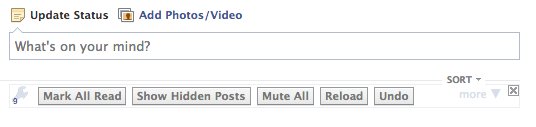
After installing Social Fixer, you will have a bar at the top of your News Feed that will give you the option to mark posts as read. Instead of seeing the same photo over and over again as more people comment on it, just mark it as read and send it away forever.
facebook work for you
11. Look at photos like a normal person
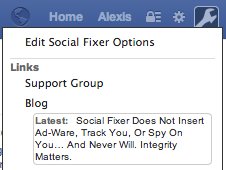
Are you annoyed when Facebook expands a photo you click on and has it take up the entire page? With Social Fixer, you can turn that off. Click the big wrench at the top right of your Facebook page, and then click "edit Social Fixer options."
facebook work for you
Then click "Disable the 'Lightbox' (aka 'Theater') photo viewer popup," and press save.
12. Weed out junk you don't care about from your feed
While you're in the Social Fixer settings, you can create some filters. Click "Filtering" on the right, and then create names and categories for filters. You can make filters for certain people, apps or keywords, and they'll show up in different tabs at the top of your News Feed.
facebook work for you
13. Give yourself a lot of white space
Social Fixer lets you simply "delete" anything you don't want to see on your Facebook page. Pretty much everything you see will have an "x" at the top right, allowing you to delete it from your page. It's pretty magical.
facebook work for you
read more...

Tuesday, 4 March 2014

CarPlay Is Apple's Latest Attempt To Take Over Your Life


Main Entry Image
Now you never ever have to stop using your iPhone -- that is if you're planning on buying a very expensive car in the next year or so.
Apple announced a new iPhone-to-automobile integration system called CarPlay on Monday, ahead of the Geneva auto show.
CarPlay syncs your iPhone with your car, letting you take phone calls, dictate text messages and emails and play music while driving. The new technology uses Siri to control native iPhone apps and a few third-party apps, including Spotify and iHeartRadio.
CarPlay won't work with the one app drivers probably need the most: Google Maps. Instead, CarPlay gives drivers access to turn-by-turn directions in the much-maligned and far less reliable Apple Maps.
CarPlay will be available in Ferrari, Mercedes-Benz and Volvo cars starting this week. Thirteen other auto makers, including Ford, General Motors, Hyundai and Toyota, will integrate CarPlay, though Apple did not specify when. The system will only be available starting with new, 2014 models and will only work with the iPhone 5, 5C and 5S.
Apple first hinted at its plans to weasel iOS into people's cars at its developers conference in June. Last year, Apple made a similar partnership to integrate iOS into select Beetles with a built-in iPhone docking station.
Both Apple and Google want a bigger place in people's cars, starting with the software that runs vehicles' entertainment and navigation systems. Last month, Googleannounced plans to bring Android to four auto makers' vehicles.
Sources - Huffnews
read more...

Sunday, 2 March 2014

The Myth Of Freedom From Facebook


Main Entry Image

When the CEOs of big companies buy smaller startups in a grab for their members, the executives know there’s a very important, very formulaic promise they must make: Nothing will change.

Mark Zuckerberg trotted out this line when he acquired Instagram. (“We're committed to building and growing Instagram independently,” he assured.) And he parroted it again last week after paying $19 billion for WhatsApp.

The messaging service will, Zuckerberg wrote, “continue to operate independently within Facebook.”

The arrangement sounds nice, but the reality isn't so rosy. The question of whether or not these “independent” new Facebook satellites get to keep their logos or craft their next features pales in comparison to a larger issue that threatens their promised autonomy: the creep of Facebook’s core values into WhatsApp and Instagram’s DNA.
Already, there have been changes to Instagram -- like its crusade against photos ofunshaved bikini lines and push toward real-life personas -- that bear Facebook’s fingerprints. As the social network snaps up more WhatsApps and Instagrams in its “unite and conquer” plan to own each facet of our online social lives, it’s likely we’ll find it harder to escape Facebook’s ideas about personal data, good behavior, and privacy.

That doesn’t mean we’ll stop socializing. But like a boozy dinner party crashed by your company's head of HR, Facebook's overarching presence may mean even more places where we interact according to Facebook's mores -- even when we don't see its blue logo at the top of our screens.

“WhatsApp and Instagram are small little companies with a little bit of software. And that’s why I think Facebook will fundamentally change these companies over time,” says Brian Blau, an analyst with the research firm Gartner Group. “[Facebook] will maintain [them] separately for a while because they have to. But over time ... they’ll be more similar than they are different.

Many of us, having been on Facebook the better part of a decade, may be so used to its code of conduct that we’ve forgotten what it looks like and makes us do. Here’s a refresher: Facebook loves real identities, gulping down data, banning the sensitive and risqué, acting first then begging forgiveness later, and feeding Facebook at all costs.

The posters plastering its offices, the handiwork of a kind of internal propaganda lab, trumpet its dogma as if hoping employees will internalize the beliefs by osmosis: “The foolish wait,” “Done is better than perfect,” “Move fast and break things.” (Just in case that doesn’t cut it, employees have also been given a little red book with aphorisms from Zuck to live and work by.)

The independently operated Instagram has embraced enough of those values to question how, exactly, Zuckerberg defines “independent.”

Instagram’s first major change after the acquisition was to put the Facebook motto “move fast and break things” in action. Three months after the deal closed, Instagram outraged its members by overhauling its privacy policy to show users’ photos in ads, a change Instagram later reversed under public pressure. The same month, Instagramremoved photo previews from Twitter, a Facebook rival, to force people onto Instagram’s site instead. (Feed Facebook? Check.) Next, Instagram followed Facebook’s lead by making people locked out of their profiles submit government-issued IDs as proof the accounts were theirs. (Emphasize real identities? Check.) A year ago, Instagram took on a Facebook employee as chief operating officer. Next itbanned naughty hashtags like “#sex” and, bizarrely, “#foodorgasm.” And in May of last year, it introduced photo-tagging, a trademark Facebook feature that asks people to tag friends in photos. (Crack down on content? Check. Go after more data? Check.)

In contrast with its pre-deal days, Instagram is more carefully watching the photos you share, more vigorously pushing you to be your real self and more closely aligned with Facebook. These changes suggest the creeping reach of the Facebook values into Instagram's service.

Unlike Facebook or Instagram, WhatsApp gave itself three unequivocal commandments to stick to. “No Ads! No Games! No Gimmicks!” read a note WhatsApp CEO Jan Koum kept mounted next to his desk. Their principles are so clear -- and so antithetical to Facebook’s -- that it will be especially glaring if Facebook’s ideas should bleed over into its new acquisition. Koum will also become a Facebook board member, which may give him extra power to keep his domain isolated from the mothership.

But Facebook also has an insidious and highly effective way of pushing its agenda: Its alleged do-gooder stance.

The social network likes to remind us it’s not a normal company concerned with silly things like money or shareholder value. It’s a company “built to accomplish a social mission,” Zuckerberg wrote in the opening line of his letter to investors, pre-IPO.
Facebook prides itself on its dedication to making the world “more open and connected,” which it optimistically predicts will improve friendships, fix commerce and spruce up our governments. This lofty crusade should make us even more dubious of Facebook’s promise not to rub off on the dominions in its empire. Facebook’s conviction that it’s on a humanitarian mission to “rewire” how we share and connect gives it a cover for proselytizing its ideas on personal information. Say it asks WhatsApp to start tracking our locations. Facebook certainly wouldn’t be trying to make money, it might protest. It’s just trying to do good.

Facebook likes to argue we can always opt out if we don’t want to live by the rules of its carefully controlled, information-collecting universe. But it also knows from experience there isn’t too much it can do to us and have us leave -- whether it’s on Facebook, Instagram or WhatsApp. Where our friends go is where we stay. And where our friends go is where Facebook, and its ideas, go too.
Source - Huffnews
read more...
 
Copyright © 2014 The Manasseh Post • All Rights Reserved.
Distributed By Free Blogger Templates | Template Design by BTDesigner • Powered by Blogger
back to top